


 English
 Español
Hot Products
-
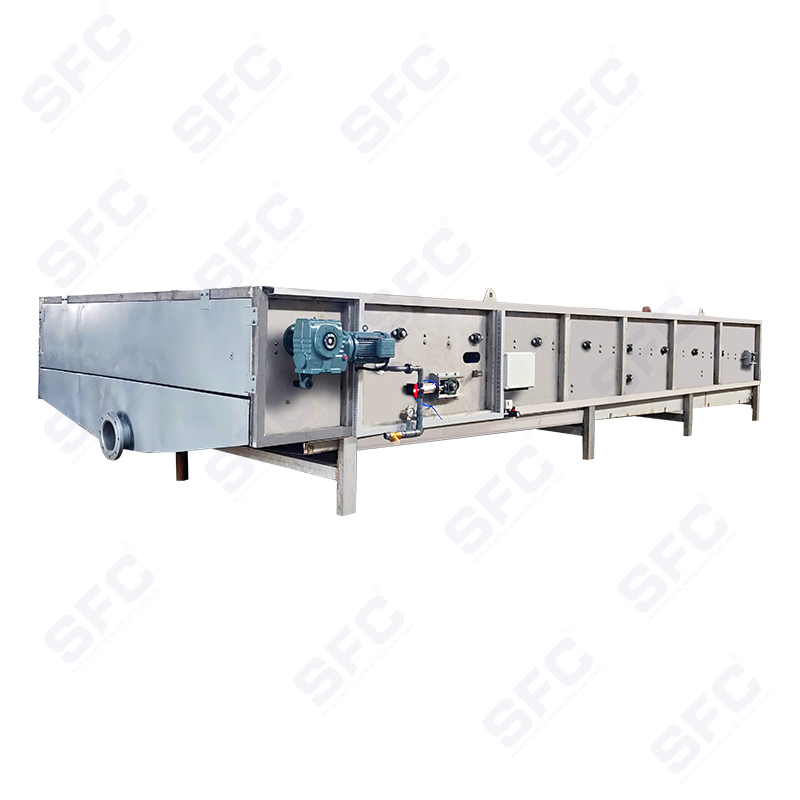 FBT series belt type sludge thickener
-
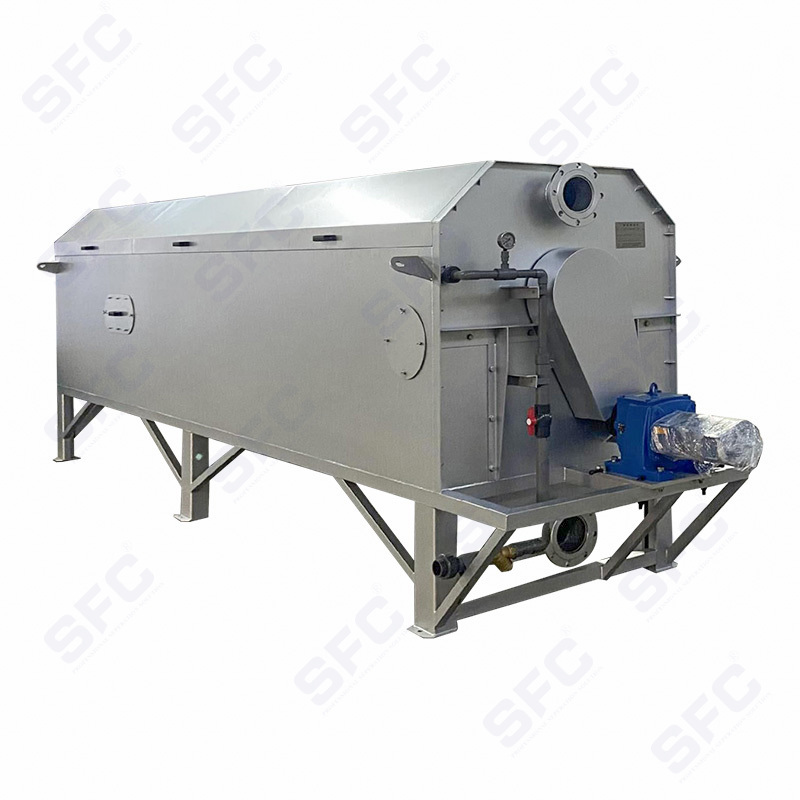 FRDT series rotary drum sludge thickener
-
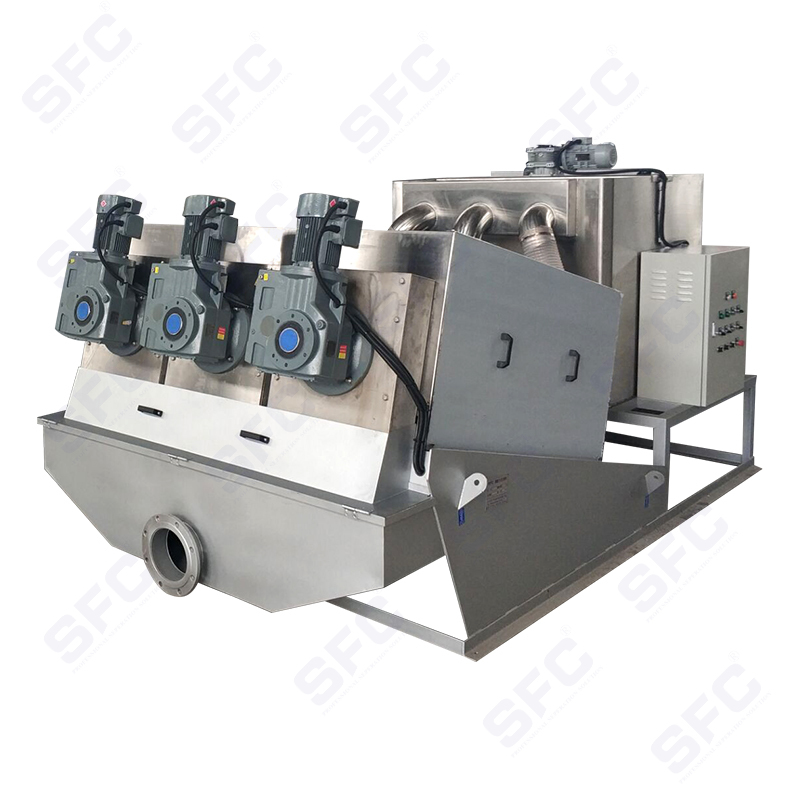 SST series screw type sludge thickener
-
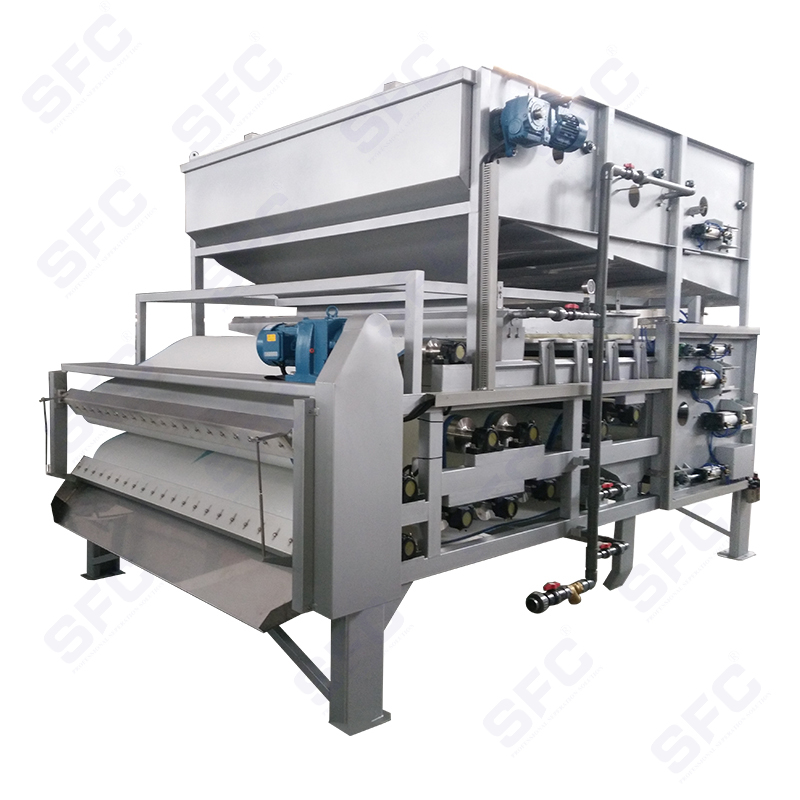 Belt type sludge thickening and dewatering machine
-
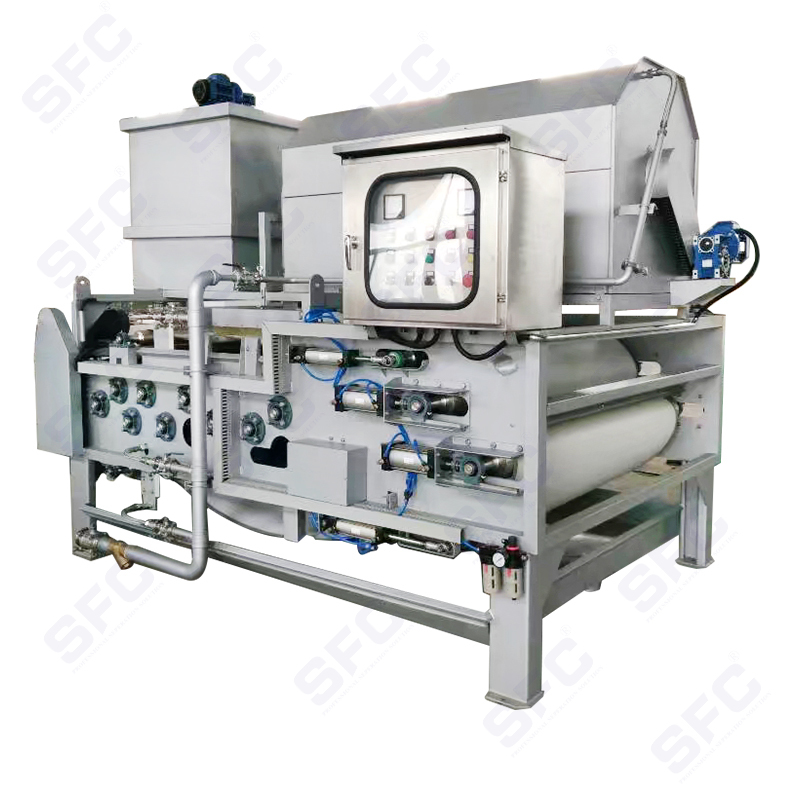 FTB series rotary drum sludge dewatering machine
-
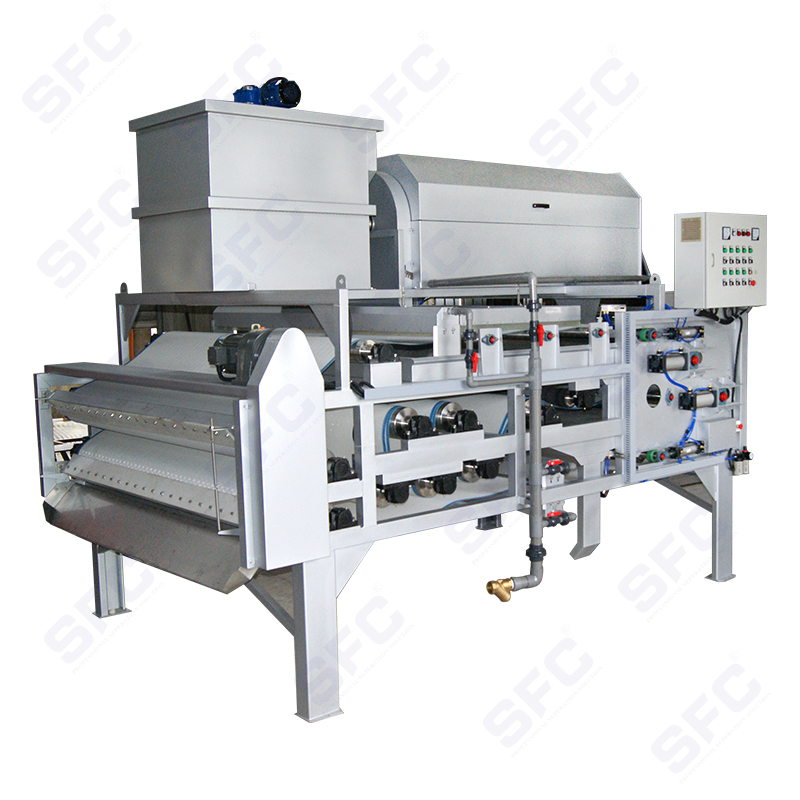 FTE series rotary drum sludge dewatering machine
-
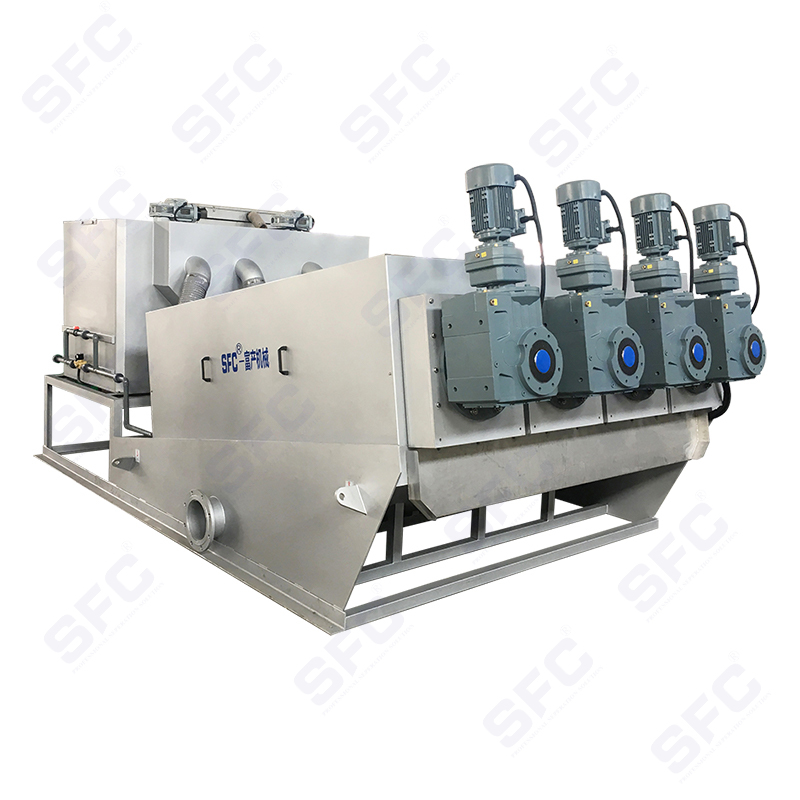 DL series screw sludge dehydrator/ screw type sludge dewatering machine
-
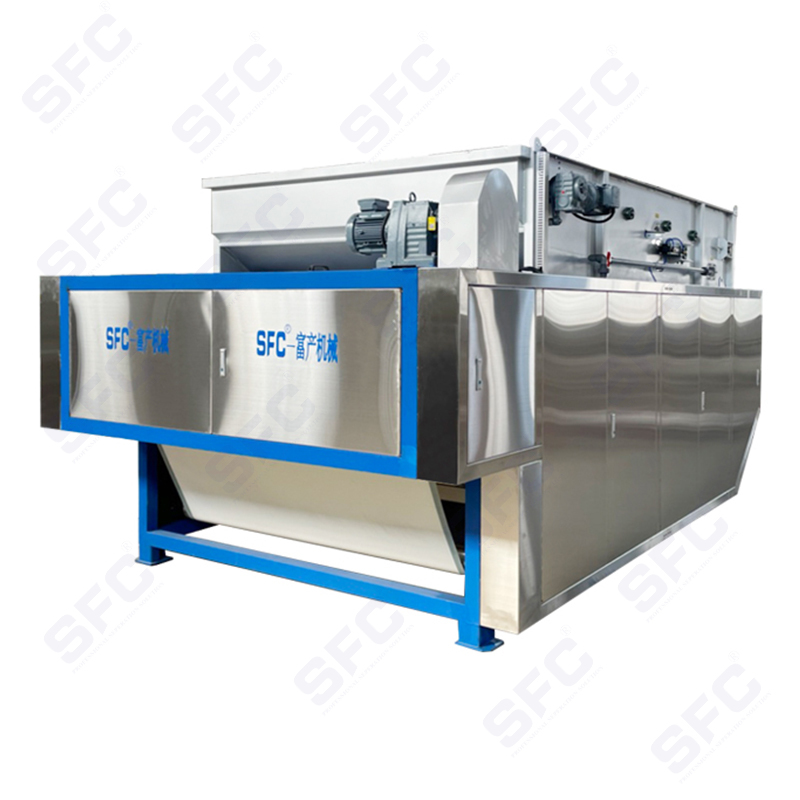 GDY series belt sludge concentration and dewatering machine
-
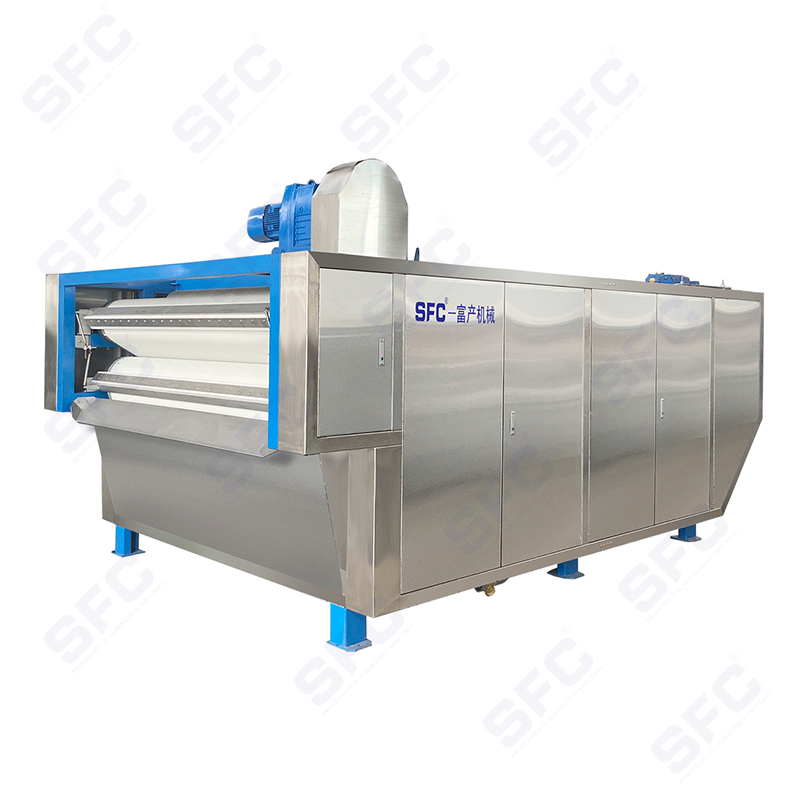 SD-High pressure sludge deep dewatering system
-
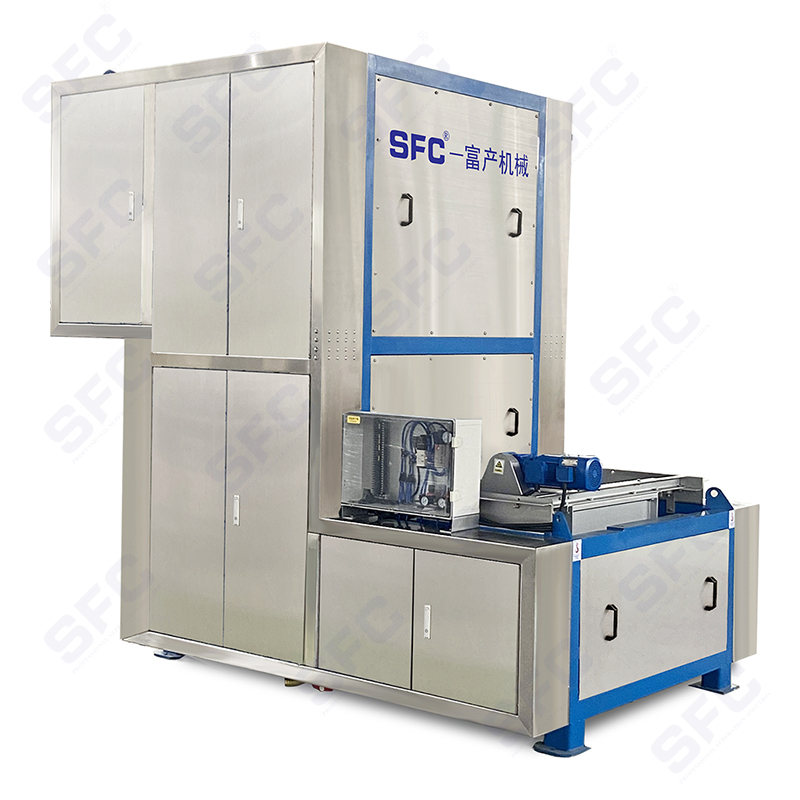 LSD-High pressure sludge deep dewatering system
-
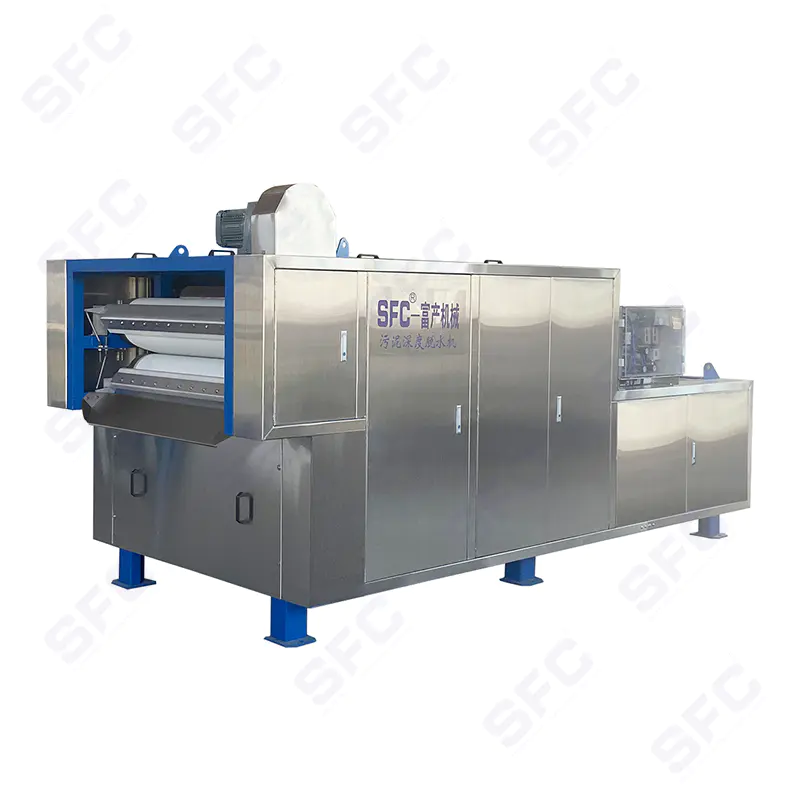 ZSD-High pressure sludge deep dewatering system
-
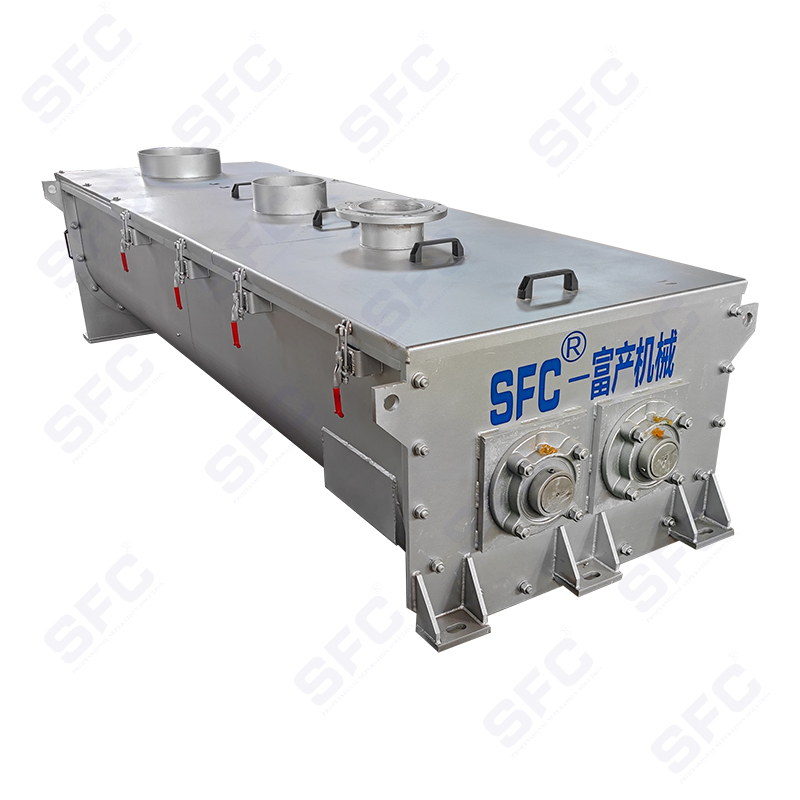 SFC-DM sludge mixer
What Are the Main Types of Sludge Thickening Equipment Used in Wastewater Treatment?
Wastewater treatment plants generate large amounts of sludge as a byproduct of the process of purifying water. This sludge is composed of water, organic matter, and inorganic solids, and managing it efficiently is one of the most critical challenges in wastewater management. Before sludge can be treated further through digestion, dewatering, or disposal, it must be thickened. Sludge thickening is the process of reducing the water content of sludge to increase its solid concentration. This step helps minimize the volume of sludge, lowering both operational costs and environmental impact.
To achieve this, various types of sludge thickening equipment are used. Each type employs different mechanical or gravitational principles to separate water from solids. The choice of equipment depends on factors such as sludge characteristics, plant size, operational requirements, and energy efficiency. This article explores the main types of sludge thickening equipment used in wastewater treatment, their working principles, advantages, limitations, and applications.
1. Gravity Thickeners
Working Principle
Gravity thickeners rely on the natural settling properties of sludge. Sludge is introduced into a large circular tank (similar in design to a sedimentation tank), where gravity causes the solid particles to settle at the bottom, and clarified water rises to the top.
Advantages
Low energy consumption since it operates mainly on gravity.
Simple design and operation, making it easy to maintain.
Cost-effective for large-scale plants with sufficient land.
Limitations
Requires large land area for installation.
Settling efficiency can be slow and highly dependent on sludge properties.
May need chemical conditioning (e.g., polymers) for optimal performance.
Applications
Gravity thickeners are commonly used in municipal wastewater treatment plants, especially where land availability is not an issue. They are suitable for primary and secondary sludges with moderate settling characteristics.
2. Dissolved Air Flotation (DAF) Thickeners
Working Principle
Dissolved air flotation uses microbubbles to separate solids from water. In this process, air is dissolved in water under pressure and then released into the sludge tank. As bubbles rise, they attach to sludge particles, causing them to float to the surface where they form a thick scum layer that can be mechanically removed.
Advantages
Effective for light, oily, or scum-laden sludge that does not settle easily by gravity.
Produces sludge with higher solids concentration than gravity thickeners.
Compact design requires less space compared to gravity systems.
Limitations
Higher energy costs due to pressurization and pumping systems.
Requires specialized operation and maintenance.
May need chemical coagulants or flocculants to improve performance.
Applications
DAF thickeners are widely used in industries such as food processing, oil refineries, and municipal wastewater plants where sludge contains fats, oils, or light solids that resist gravity settling.
3. Rotary Drum Thickeners (RDT)
Working Principle
Rotary drum thickeners use a slowly rotating drum covered with a filter screen. Sludge is introduced into the drum, and water passes through the screen while solids are retained and gradually thickened. A gentle rolling action enhances drainage without damaging the sludge flocs.
Advantages
Compact and space-saving design, suitable for plants with limited land.
Can achieve consistent thickening performance.
Operates continuously with low labor requirements.
Limitations
Screens may clog and require regular cleaning.
Not ideal for sludges with very fine particles or highly variable compositions.
Moderate energy use compared to gravity thickeners.
Applications
Rotary drum thickeners are commonly used in medium-sized municipal plants and industrial applications. They are effective for waste activated sludge (WAS), which tends to be difficult to thicken with gravity alone.
4. Belt Filter Thickeners (BFT)
Working Principle
Belt filter thickeners use a moving porous belt that allows water to drain through while solids are retained and thickened. Conditioned sludge is distributed onto the belt, and through a combination of gravity drainage and gentle pressure, water is removed.
Advantages
Can achieve high solids concentration compared to gravity-based methods.
Continuous operation with relatively low manpower needs.
Flexible and can handle a variety of sludge types with chemical conditioning.
Limitations
Chemical usage (polymers) often required for effective thickening.
Moving parts and belts require regular maintenance and replacement.
Higher operational cost compared to gravity thickeners.
Applications
Belt filter thickeners are widely used in medium to large-scale plants for waste activated sludge, which benefits from mechanical thickening. They are often used as a pre-thickening step before dewatering with a belt press or centrifuge.
5. Centrifugal Thickeners
Working Principle
Centrifugal thickeners use high-speed rotation to generate centrifugal force, which separates water from solids based on density differences. Sludge is introduced into a rotating bowl, where solids are forced outward and water is expelled inward and removed.
Advantages
Highly effective at thickening a wide variety of sludges.
Compact equipment footprint, ideal for plants with limited space.
Produces sludge with high solids concentration.
Relatively fast processing compared to gravity methods.
Limitations
High energy consumption due to continuous rotation.
Requires skilled operators and regular maintenance.
Higher initial capital cost compared to gravity thickeners.
Applications
Centrifugal thickeners are used in both municipal and industrial plants where high-efficiency thickening is required. They are particularly suitable for facilities with limited space but high sludge volumes.
6. Gravity Belt Thickeners (GBT)
Working Principle
Gravity belt thickeners combine the simplicity of gravity drainage with the efficiency of a belt system. Sludge is conditioned and spread onto a porous moving belt. Gravity allows water to drain through the belt, and gentle pressure rollers may enhance dewatering.
Advantages
Produces a uniform thickened sludge suitable for downstream processing.
Low energy consumption compared to centrifuges.
Can handle large volumes of waste activated sludge.
Limitations
Performance can vary depending on sludge characteristics.
Belts require frequent cleaning to prevent clogging.
Requires polymer conditioning for best results.
Applications
Gravity belt thickeners are widely used in municipal wastewater treatment plants as a cost-effective method of thickening waste activated sludge.
Comparison of Main Types
| Type of Thickener | Energy Use | Solids Concentration | Footprint | Typical Application |
| Gravity Thickener | Low | Low–Medium | Large | Municipal, primary sludge |
| DAF Thickener | Medium–High | Medium–High | Compact | Oily, industrial sludge |
| Rotary Drum Thickener | Medium | Medium | Compact | Waste activated sludge |
| Belt Filter Thickener | Medium | Medium–High | Medium | WAS, municipal plants |
| Centrifugal Thickener | High | High | Compact | Industrial/space-limited plants |
| Gravity Belt Thickener | Low–Medium | Medium | Medium | WAS, municipal sludge |
Conclusion
Sludge thickening plays a vital role in wastewater treatment by reducing sludge volume, improving handling, and lowering treatment and disposal costs. The main types of sludge thickening equipment—gravity thickeners, dissolved air flotation units, rotary drum thickeners, belt filter thickeners, centrifugal thickeners, and gravity belt thickeners—each offer distinct advantages and limitations.
The choice of equipment depends on sludge characteristics, available land, energy considerations, and plant size. For example, gravity thickeners are best for large municipal facilities with space availability, while centrifugal thickeners are more suited for compact, high-efficiency applications. DAF thickeners excel at handling oily sludges, while belt-based systems are ideal for waste activated sludge.
By selecting the appropriate thickening technology, wastewater treatment plants can enhance efficiency, reduce operational costs, and ensure sustainable sludge management practices.
Related products recommendations
- Phone: +86-13816732007
- Tel: +86-021-50966266
- Email: [email protected]
- Address: Room 1201.1122 Xinjinqiao Rd, Pudong new district, Shanghai PRC China
Copyright © Shanghai Fuchan Machinery Technology Co., Ltd. All Rights Reserved.
 Manufacturers Of Sludge Treatment Equipment